
Emerging Trends for 2025
March 12, 2025 | 9 minute read
Written by Arti Jalan
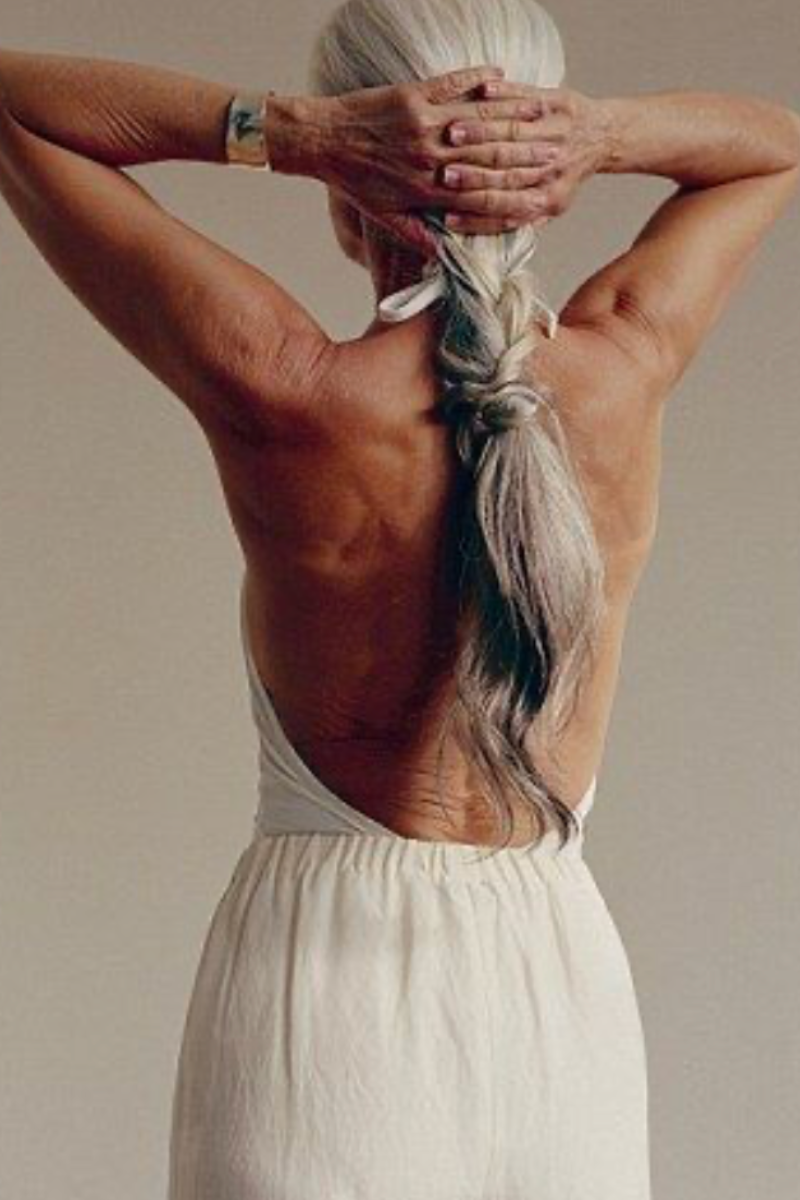
Photo: Yazemeenah for Land of Women
When it comes to trends, predictions, and thinking ahead to our emerging futures, I love delving into what I call Intuitive Forecasting. Noticing clues in the world around me, as well as the way I’m feeling within myself, is how I pick up threads that weave themselves into recognizable patterns.
I’ve been thinking of some of the things that I feel like will start to gain momentum this year, pulling these ideas both from my own lived experience and desires, as well as insights from the collective consciousness.
Here are 3 emergent trends that I think will begin to pick up this year.
1.Herbalism
The wellness industry has been on quite the journey in the past few years, where we were taken on a scenic branding trip through the eras of self-care and sheet masks. With a long layover in supplements, we’ve now arrived at a new destination: simplification.
Recently, it seems as though we’ve all been looking to pare down our wellness practices, and what now matters most is simplification (fewer, better ingredients), with personalization.
The marketing industry is currently all about personalization and personal experiences as a way of connecting deeply with your community (a movement we love!), and in my opinion, herbalism sits snuggly at the axis of both of these points.
From a simplification perspective, herbalism is an ancestral practice that has worked for millennia, coupled with an emerging collective desire to reconnect to the Earth, to plants, and to a more natural way of living.
From a personalization perspective, herbalism is quite unlike allopathic medicine, which is usually a one-size-fits-all practice. Herbalism is a deeply intuitive and personal healing system, one that largely depends on each individual’s particular constitution. When working with herbs, we have to ask ourselves – what works for me, as an individual?
Even the natural supplement industry has deviated away from its original intent, now being consumed much like conventional allopathic medicine – in a one-size-fits-all way – which doesn’t always provide the results we’re looking for. Because of this, there’s a growing shift towards a more intuitive, personalized approach to healing.
People are seeking out practitioners who look beyond symptoms, working instead to uncover root causes and guide them towards medicine that truly aligns with their unique bodies.
This shift isn’t just a passing trend; it’s a return to a more attuned way of healing – one that honours individuality, wisdom, and deep restoration, which feels like a beautiful nod to a future that is ancestrally emergent.
One of the most inspiring aspects of the resurgence of herbalism is how seamlessly it aligns with the shifting paradigms of our time. As we move deeper into the Age of Aquarius, we’re stepping into a future rich with possibilities – where healing and wellness expand in ways we once only dreamed of, and where conscious tech in medicine becomes available to all (we can’t wait for med beds!). In the meantime, energy medicine is rising, with practices like reiki, meditation, and sound healing becoming more widely embraced. Herbalism, too, is part of this evolution. Plants are not just remedies; they are sentient beings, deeply attuned to our energy and calls for healing. Their wisdom is ancient, their medicine both physical and vibrational – offering us connection, restoration, and reciprocity.
Keep an eye on the rising tide of herbalism, Traditional Chinese Medicine, Ayurveda, plant medicine, and the wisdom of herbalists in the years ahead.
2. Biophilic Design
Architecture and design are about to get a glow up in the best way. While this isn’t groundbreaking, I do sense a move away from characterless design that feels lifeless, towards nature as part of the built environment.
Drab city life is really starting to grate on everyone I speak to, and the lack of connection we all seem to be feeling is largely impacted by the environments we live in.
In the pursuit of minimalism – endless views of grey, glass, steel, concrete, and straight lines – we have lost meaning, and we have lost beauty.
While biophilic design might be something that I’m personally championing, this shift towards both organic architecture and architecture that is beautiful to look at, is a solution that serves us, the collective, and the Earth, in a multitude of ways.
When biophilic architecture weaves its way into our cityscapes, it directly nurtures our personal wellbeing on every level. Mentally, natural elements soften the edges of urban life, easing stress and anxiety, lifting moods, and enhancing focus and creativity. Physically, cities designed with nature and beauty in mind inspire movement – encouraging walking, cycling, and time outdoors, leading to a healthier, more vibrant society. Energetically, living in harmony with organic forms rekindles our connection to the natural world, gently regulating our nervous systems. Biomimetic design speaks to something innate within us, activating a deep sense of calm and belonging. This is more than aesthetics – it’s a return to the sense of balance we’re all deeply missing.
On a collective level, when we are personally well, we naturally have the capacity and resources to pour into others. Our desire to connect, be in community and shared spaces, and engage with others becomes elevated, creating pathways of mutual support and thus, thriving societies.
Lastly, from an Earth perspective, biophilic design is how we ensure a sustainable and regenerative future. Bringing in natural elements is proven to improve air quality, as green walls, rooftop gardens, and urban forests help filter pollutants and provide cleaner air, not to mention create much-needed pollinator pathways.
Living buildings and tree-lined streets also encourage temperature regulation, as they reduce the urban heat-island effect, keeping cities naturally cooler.
When we experience the benefit of nature in our daily lives, we are more likely to protect and nurture it, meaning our individual interest in environmental stewardship naturally increases.
Some of the visions for nature-inspired cityscapes that I have are – floating green walkways, rooftop gardens at every level, pollinator pathways enmeshed in city streets and laneways, fruit trees lining public avenues for easy access to nourishment, urban rain gardens, tram tracks laid over beds of stonecrop, and so many other dreamy ideas! See our Pinterest board on Nature-Inspired Design for visuals on what this design concept looks and feels like.
While biophilic design isn’t anything new, I sense that our zealous quest for a more sustainable future that considers both our collective and planetary wellbeing will bring this movement to the forefront.
3. Artful Aging
Aging has been a big, almost unescapable topic in recent years (no matter how you view it), but I’m sensing a shift in the conversation soon, one that feels really expansive.
3 aspects that are influencing this trend:
· Boomers
· Diversification Amongst Age Groups
· Realness in a Digital World
Boomers
Research from the Future Lab tells me that while Millennials have now replaced Boomers as the biggest generation, Boomers remain an important age group with deep wisdom, spending power, and expanded curiosities. Our traditional views of age and certain ideas that come with them are eroding, and Boomers are defying those outdated tropes with a true zest for life – they are adventurous, open, and are living longer and healthier lives.
For too long, aging meant being quietly ushered into the background, often being placed in care facilities that kept elders “out of sight, out of mind.” But times have changed. Today, Boomers are actively engaged in the world – traveling, creating, learning – interwoven amongst younger generations. Their presence is not only seen but celebrated, offering a much-needed reimagining of what aging can look and feel like – vibrant, fulfilling, and unapologetically alive.
Diversification Amongst Age Groups
I’ve really noticed how much the barriers between age groups are starting to crumble.
Age is starting to almost be irrelevant in social settings, and we’re hitting completely different milestones/stages of life than generations before. Instead of only connecting with like-aged peer groups, we’re connecting on shared interests, ideas, and values, regardless of age.
I’ve always been drawn to the natural intermingling of age groups – a dynamic that historically allowed communities to thrive. Elders offered wisdom and grounding to teenagers, helping to shape their values and inner compass, guiding them towards patience and purpose. Grandmothers nurtured young women, while teenagers played with and entertained the children, creating a continuous cycle of learning and connection. Societies once wove generations together seamlessly, allowing us to see where we were headed, while staying rooted in where we came from.
Examples of this trend, where age is fluid and experiences are shared across generations, are popping up in different areas of my own life – dinner parties where children are part of the conversation at the grown-up table, workshops and gatherings in the city that draw people of all ages, meaningful conversations that are rooted in shared ideas rather than life stages.
This natural blending is reshaping the way we see aging – not as something to resist, as beauty companies would have us believe, but as a natural progression, ripe with wisdom and value. It feels more normal, more approachable, and maybe even… something to look forward to?
Realness in a Digital World
We’re all yearning for a more natural way of being, living life as our most authentic and connected selves. This desire for realness feels like it’s being actualized through a rejection of oppressive beauty culture that encourages sameness and perfection, with the embracing of bodies that have actually lived – laugh lines, scars, wrinkles, grey hair (I’ve especially noticed so many women across all ages who have stopped dyeing their hair).
Taking this a little bit deeper by studying the effects injectables have on communication, we see an almost direct correlation to our current collective feelings of deep loneliness. Botox, while often seen as a simple cosmetic tweak, has a deeper impact on the way we connect with one another. As humans, we rely on microexpressions – subtle, fleeting movements in the face – to communicate emotion, signal empathy, and build trust. This process, known as face mirroring, helps us feel seen and understood in social interactions.
When Botox reduces movement in key facial muscles, it can subtly disrupt this natural exchange. A smooth, expressionless forehead or frozen smile may seem minor, but it can make emotional and non-verbal cues harder to read, creating a disconnect in conversation. Without the ability to fully mirror each other’s expressions, the depth of human connection – something we instinctively seek – can feel dulled.
In a world where authentic connection is becoming increasingly rare, embracing our natural expressions might be one of the simplest yet most profound ways to foster deeper relationships.
Much like the sleek lines and glass facades of modern architecture, our impulse to perfect our faces is having a similar effect. In stripping away the textures and nuances that make us deliciously unique, human, and beautiful, we risk creating a sense of disconnection, both from ourselves and from each other.
As the industry pushes us into becoming gradually more artificial, filtered, and digital, doing things in an organic, analog, and natural way is how we reclaim our personal power, reconnecting us with ourselves, others, and the land.
With these influences and understandings, I really feel like we’re going to collectively catapult into a time where aging becomes both largely irrelevant (when compared to how obsessive we’ve been about it up until now), as well as something to lovingly and artfully embrace.
I would like to note that I do fully believe that the rapid advancements in conscious tech and our own energetic upgrades and capabilities that are coming, are going to usher us into a time where we’ll be living much longer and healthier lives, as well as realities where healing, aging and bodily functions will truly transcend the ordinary. Until that time, this perspective on Artful Aging feels like the most gentle, natural, and expanded approach.
These 3 emerging trends are not isolated from one another but rather interwoven, each enriching the other to shape a more thoughtful and regenerative future.
The natural lines and softer edges connect Biophilic Design and Artful Aging, while the ancestral wisdom and frequency healing of Herbalism intersects with Biophilic Design’s emphasis on organic growth and natural rhythms. At the core, all have a shared significance on our individual, collective, and planetary wellbeing – the thread tying these three trends together.